Post Office Telecommunications Journal
Volume 12 Part 4 Autumn 1960
Installations Extraordinary
To those employed in the telephone service, the words
"customer's installation" can conjure up a wide range of possibilities, from
the simple direct exchange line through a variety of "plan numbers" to
switchboards large and small. These are all standard arrangements which have
been developed because, between them, they meet the needs of the majority.
It is not perhaps widely realized that there are nevertheless many
customers, particularly in the large cities, whose specialized requirements
demand installations which do not in the least resemble the more
conventional types. Some of them involving unique designs have merited the
attentions of the Engineer-in-Chief 's Office, and readers of the Journal
will doubtless recall descriptions of a few of these in past issues. Only
passing mention seems to have been made, however, of a rather humble (in the
technical sense) type of equipment which is quite common in central London
and is also used in the bigger provincial centres. This is the "key and lamp
unit", otherwise known as the "order table unit" or, to some contractors, as
"rapid answering equipment". Its main use is to enable a considerable volume
of incoming calls to be handled by a team of enquiry or booking clerks, but
it also finds application in special installations such as that of the
Surrey Fire Brigade (Summer Journal).
The Key and Lamp Unit
Key and lamp units are by no means a new development; they were being
installed in London as far back as 1926, the equipment being wired up on
site in cabinets provided by the subscriber or made up by the Post Office.
At least one of these original suites of units (Fig. 1) is still in use at a
large London store. The present type of 10-way key and lamp unit (differing
little from the original except that it had gained official recognition) was
first installed in London in 1939, although it was not until after the war
that it came into general use.
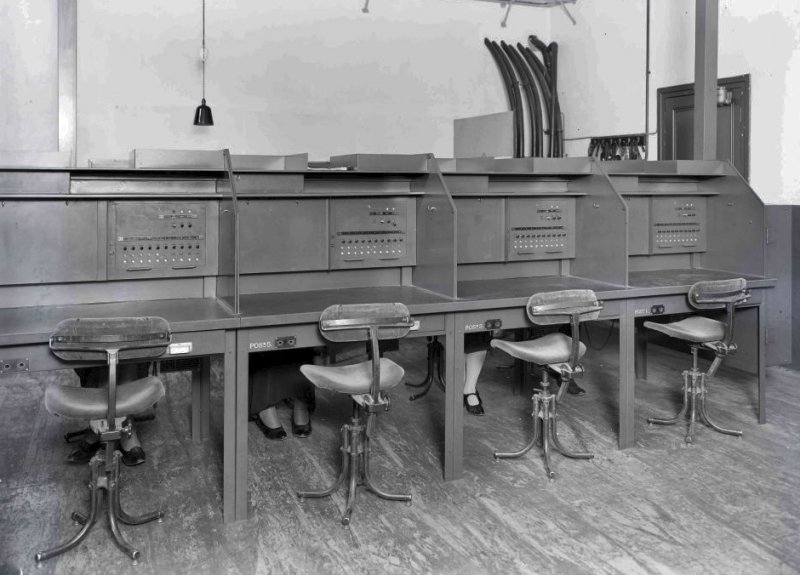
Fig. 1 - An early type of key and lamp installation
(Messer's Lyons - Cadby Hall)
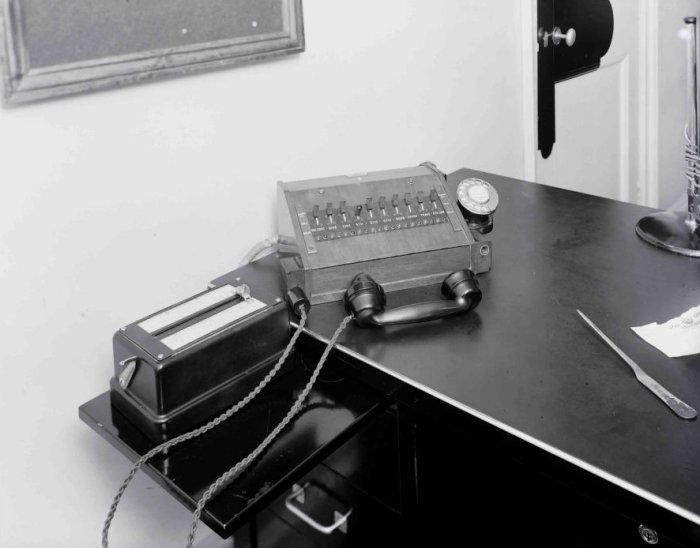
Fig. 2 - Simple 10-way Key and Lamp Unit, the Key and
Lamp Unit SA4062
The basic unit (Fig. 2) is very simple. It consists of 10
circuits, each controlled by a three-position key and having two associated
lamps which are powered from a 6-volt A.C. supply. One is a calling lamp,
the circuit responding to the normal 17 cycle ringing current and thus being
suitable for the termination of an exchange line or an extension from a
switchboard. The second lamp acts as a visual engaged signal which glows
when the circuit is in use by any of the clerks. The three-position keys
provide "receiving", "holding", and "speaking" facilities, and the clerk
normally uses a hand-microphone. Associated with each installation is an
apparatus rack (Fig. 3) housing the control relays and power equipment.
Although key and lamp units are sometimes used singly, their chief
application is in large installations in which each calling signal is
presented to a number of clerks, in the same way as a call on an auto-manual
switchboard. Such installations may consist of up to a hundred or more key
and lamp units.
Flexibility
One of the great attractions of the key and lamp installation is its
flexibility. This is at a maximum if each unit is wired back separately to a
single large distribution frame for jumpering to the incoming lines. Units
can then be grouped to any plan required, with different circuits appearing
on each group. In practice, it is sometimes more convenient to wire groups
of units in parallel to sub-distribution frames, which are then cabled to
the main frame. This economizes in cable at the expense of some of the
flexibility, but is dependent on the customer being able, and willing, to
provide a convenient site for the sub-distribution frames. Often, however,
his furniture lay-out does not permit of this.
Each unit can be built up in capacity by adding further 10-way strips, and
there are commonly in use groups of 20, 30 and 50 line units which provide
the equivalent of an answering multiple such as is found in a telephone
exchange. By the addition of a few relays on the apparatus rack, signalling
circuits can be provided between the units, or they can be equipped with
outgoing signalling or dialling circuits.
Other refinements available include a flicker signal for delayed answer
calls (30 seconds is usual), and a multipled monitoring or observation panel
for check on "time to answer" and general service. All these circuits are
extremely simple by modern standards, but in performance they hold their own
well, and because of their simplicity their fault liability is extremely
low.
Location of Equipment
The standard mounting shown in Fig. 2 is intended for desk or table use, and
many installations are of this form. The special requirements of some
customers, however, have led to housing the units in specially made
furniture. Usually the prime object of this is to avoid interference with
the user's working space, but some of the designs are original and
decorative. These bring their complications in planning and cabling, and the
Area Sales, Traffic and Engineering Divisions have to co-operate very
closely with the customer. On the engineering side these special designs can
have their advantages, because we can often arrange for cabling,
distribution points and local wiring to be concealed while ensuring adequate
access for maintenance. This is most welcome, because the cable used for
multiple-way key and lamp units is sizeable stuff and the sight of it tends
to irritate customers who are finicky about their furniture.
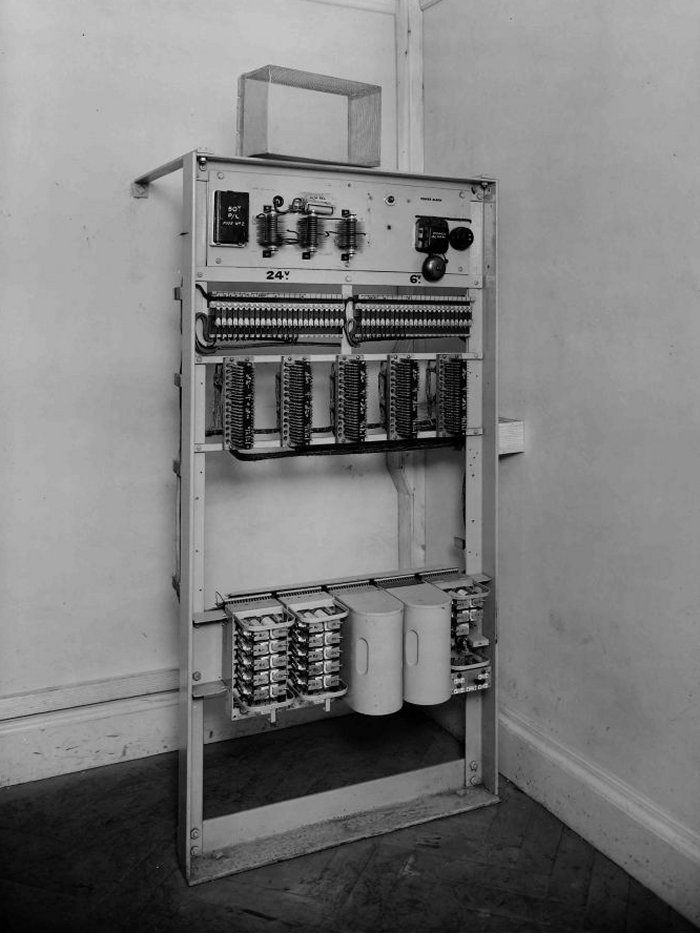
Fig. 3 - Typical apparatus rack associated with key and
lamp unit
Fig. 4 - Overhead fittings at the London Forecast
Office, Kingsway (Courtesy, Air Ministry)
The overhead fittings at the new London Forecast Office
of the Meteorological Service, designed to clear desk space for charts,
provide an interesting example (Fig. 4), while at New Scotland Yard, key and
lamp units form an integral part of the design of the Information Suite.
The prime requirement is, of course, that any call can be answered by one of
a number of clerks; the circuit arrangements can remain simple because, once
answered, the calls are not extended elsewhere. With the flexibility thus
available telephone exchange practice can be copied, the number of staff
being adjusted to the traffic expected at any time, and suitable loads being
offered to the various groups of staff. Additional flexibility can be
introduced by associating the key and lamp units with switchboard extensions
rather than with direct exchange lines, or by routing the incoming exchange
lines to the units via the PBX switchboard, so that calls can be intercepted
there at certain times, or misrouted calls picked up and dealt with by the
PBX operators.
Although each key and lamp unit installation is an individually designed
project, most of the larger ones fall into one of two main classes, those
concerned with either (i) order booking or information, or (ii) reservation.
Order Booking or Information
At installations of this kind, each clerk needs ready access to as much
information as possible, and a speedy service must be ensured by providing a
repetition of the incoming line signals over a number of positions. Such a
service is needed for instance by bookmakers, order departments of big
stores, and information bureaux in general; their requirements have in fact
a marked similarity to those of Post Office Directory Enquiry bureaux.
Automobile Association
Perhaps the most ambitious installation to date is the sweep of consoles in
the architect designed Operations Room of the Automobile Association (Fig.
5), an excellent example of the satisfactory results obtained when Post
Office requirements are considered at an early stage in planning the
accommodation. Because of the diversity of matters dealt with at A.A.
Headquarters there is a great deal of specialization; all incoming calls are
therefore received first at the main PABX switchboard and directed to the
appropriate departments. The information suite deals mainly with breakdown
calls and road weather reports, but is also used as a general night service
enquiry point.
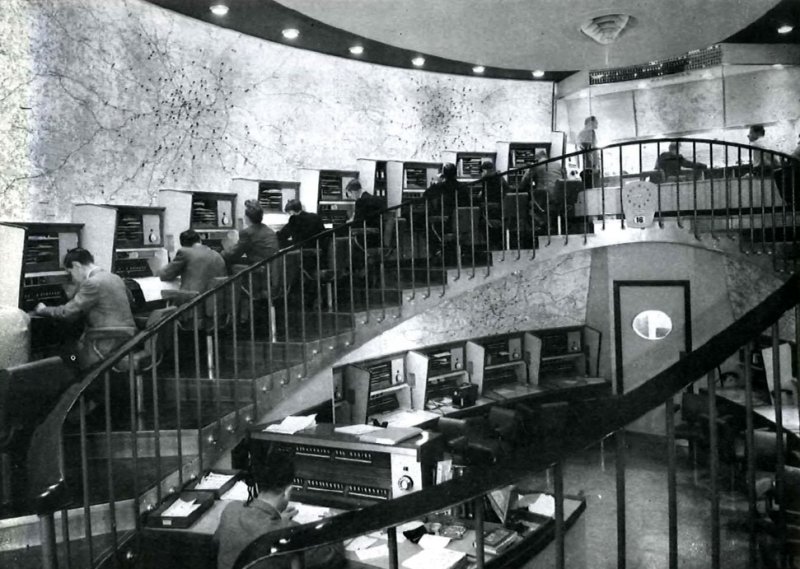
Fig. 5 - Operations room, Fanum House (Courtesy,
Automobile Association)
A main suite of 20 information positions is arranged
around the stepped "horseshoe", and an overflow provision of 10 similar
positions below (Fig. 5). Each position contains a 30-way key and lamp unit
with its equipments fitted as a single row. The 30 lines incoming from the
PABX switchboard are connected to the first 18 signals on each position via
a grading which gives full availability on the first 12 lines (that is,
calls on these lines appear at all positions). On all the incoming lines
there is a flashing delay signal operative after 30 seconds. In addition the
following circuits are available on each position:-
-
Omnibus circuit to the radio operator. He is situated
in the glass cubicle at the head of the suites and is in touch with
radio controlled patrol vehicles, whose assistance can be obtained if
required (an article on the A.A. mobile radio services appeared in the
Winter (November) 1958 Journal).
-
Individual outgoing PABX circuit, for calling A.A.
garages and other points;
-
Circuits to the watch keeper's keyboard (foreground
Fig. 5), and manager's office;
-
Incoming "night service" circuits extended from
certain A.A. offices closed at night - for example, Chelmsford,
Maidstone.
The clerks can refer to the large maps which are repeated
around the walls; they also have their individual sets of reference books.
The information is held in three categories:-
-
common information, duplicated on the positions;
-
information occasionally needed, at the watch
keeper's desk;
-
reference library, behind the radio cubicle.
The watch keeper and manager have 50-way key and lamp
units on which all circuits appear, and can thus pick up difficult calls
from any position. The radio cubicle is served by two 10-way units. In the
whole installation there is the maximum of flexibility, all units being
wired back separately to the main distribution frame, so that alterations,
whether for traffic reasons or because of changes in the organization, can
be carried out easily.
Reservations
In these installations there is an additional need to refer to a master copy
of information, which itself is changed as a result of the calls received,
and must be constantly kept up to date. Examples are organizations dealing
with theatre bookings, or travel reservations of various kinds.
In large installations, where it is not practicable to have up to date
copies of the master list available to all the staff, the information
schedule has to be split into parts and enquiries directed to the
appropriate group of staff. If incoming traffic is received via a
switchboard, distribution can be undertaken there; alternatively separate
groups of numbers can be allotted and publicized so that calls go directly
to the correct section. As would be expected the former arrangement is
usually preferred in spite of the double handling. Reactions to the
possibility of "unfortunate calls" vary, depending perhaps on whether or not
the particular business is competitive. Some of the concerns using these
installations are very "traffic conscious", however, and solutions range
from call queuing systems, recorded announcements and flashing calling
signals to liberal staffing or special adjustment of the organization to
traffic needs.
Keith Prowse
Fig. 6 shows the simplified cabling diagram of a typical installation
comprising a total of 47, 20-way key and lamp units; the inclusion of
sub-distribution points, providing a certain economy in cabling, will be
noted. Incoming calls are received over extensions from the main PABX; they
may be extended manually from the switchboard (calls from the public) or
dialed direct (from agencies served by external extensions from the PABX).
Each suite has a block of consecutive extension numbers.
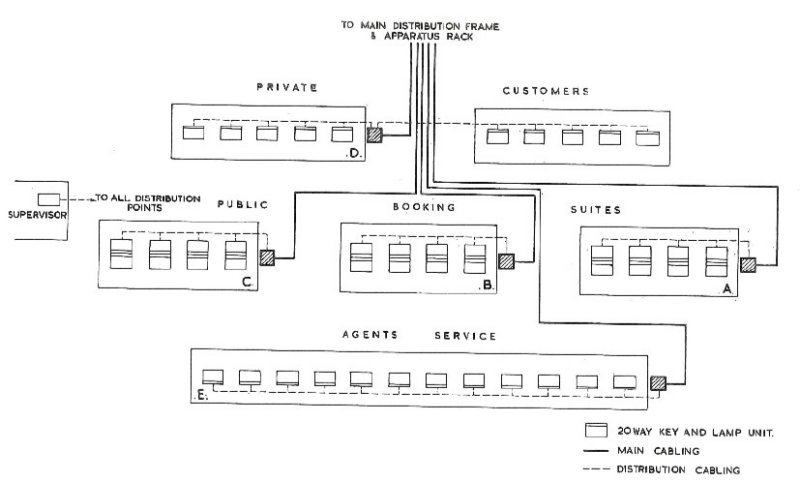
Fig. 6 - Simplified cabling diagram of a typical
installation (Keith Prowse & Co. Ltd. - Theatre Tickets)
A photograph of the "C" suite, one of the three on which
bookings from the public are received, is shown in Fig. 7; the subdistribution point is in the wooden housing on the near end of the table.
Each of these three suites dealt originally with bookings for specified
theatres, and separate master lists were kept. It was difficult, however, to
forecast the flow of traffic with any certainty, and eventually the
organization was changed to treat the A, B and C suites as one large group
for the purposes of incoming calls. This might appear to be a retrograde
step, because the clerks cannot now reach all the records without leaving
their seats. In fact, however, businesses which use this arrangement do not
seem to find it too objectionable (they are not committed to call valuation
techniques!) and their staff welcome the breaks from sitting.
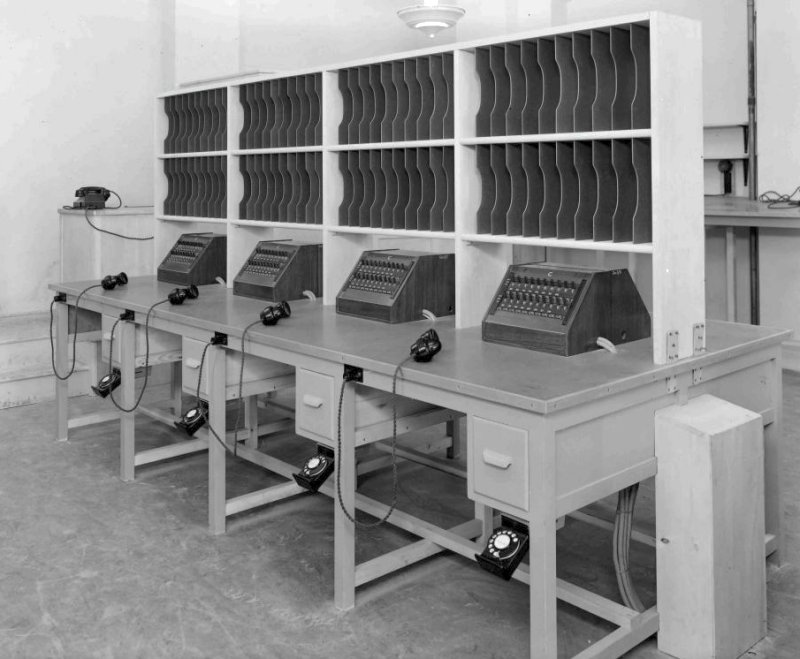
Fig. 7 - Part of the Keith Prowse installation
Trans-Canada Airlines
An unusual arrangement of the reservation type is that of Trans-Canada
Airlines, part of which is shown in Fig. 8. Here the problem of a common
master list has been tackled by arranging the operating positions around a
large circular table. The ubiquitous key and lamp units are flush-mounted
around the table, while the master information is on cards contained in
buckets fitted within a movable central section. The whole central section
can be rotated by hand (one of the handles is seen on the right of the
picture) so that any set of cards can be brought within the reach of any
reservation clerk.
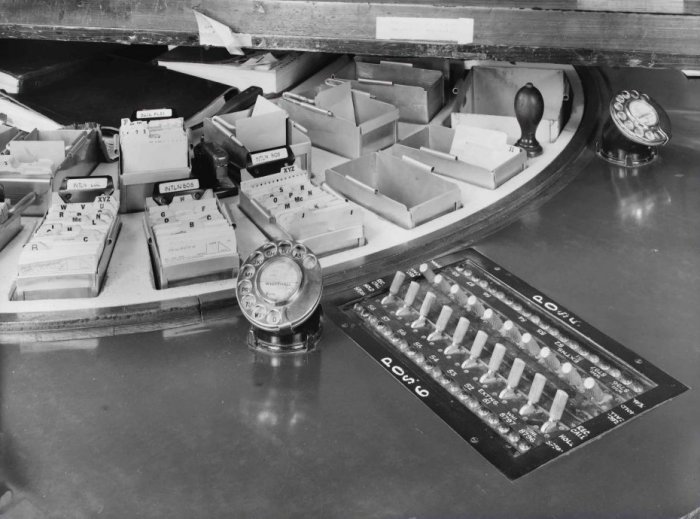
Fig. 8 - Mountings in circular table (Courtesy
Trans-Canada Airlines)
Uses of single units
Although in this article some emphasis has been laid on the use of key and
lamp units in large multiple installations, single units are also quite
widely called on to provide facilities which cannot be given conveniently by
other Post Office standard equipment. An example is their use as
"concentrators" in the Private Offices of Cabinet Ministers, where several
circuits are required to be terminated and answered by the Private Secretary
or his assistants. Certain business customers also make use of facilities of
this kind, which are usually provided by the simple 10-way unit shown in
Fig. 2, although the mountings vary. A recent local innovation is the use of
pressed steel cases with a hammered finish (Fig. 9); these present a
pleasing and more modern appearance at a cost less than that of their wooden
counterparts.
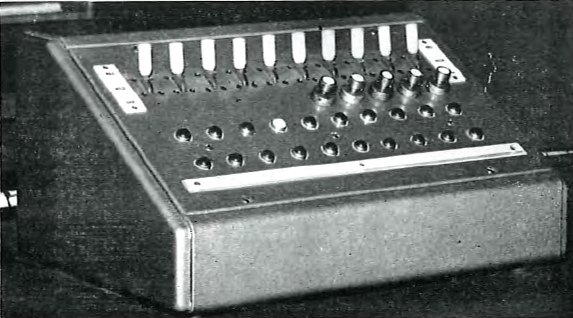
Fig. 9 - 10-way key and lamp unit in metal case
Are key and lamp units likely to stay with us in the face
of present day developments? In relation to booking installations, for
instance, we hear that in the U.S.A. there is an airline booking network
centred on a computer, which not only gives information to distant points
about flights available, but also accepts and records reservations.
Computers are, however, notoriously expensive. A more down-to-earth
alternative is the PABX with call queuing facilities, but although this has
in fact been introduced by one or two large organizations, its economic
justification lies primarily in saving manual handling of internal traffic.
The probability is therefore that key and lamp installations of varying size
will continue in use for quite a number of years to come. Some thought has
indeed been given to modernizing the standard units to conform with current
trends in design, but because they still meet essential needs quite well the
project has had to be deferred while other more pressing commitments are
being tackled. Whether or not they eventually appear in some new physical
form, their flexibility and reliability will continue to make them a most
useful feature of our service, and their permutations and combinations will
provide an interesting challenge to our planning and construction staff.
Order-Table Equipment main page
|