| ||||||||||||||||||||||||||||||||
|
TELEPHONE - TABLE
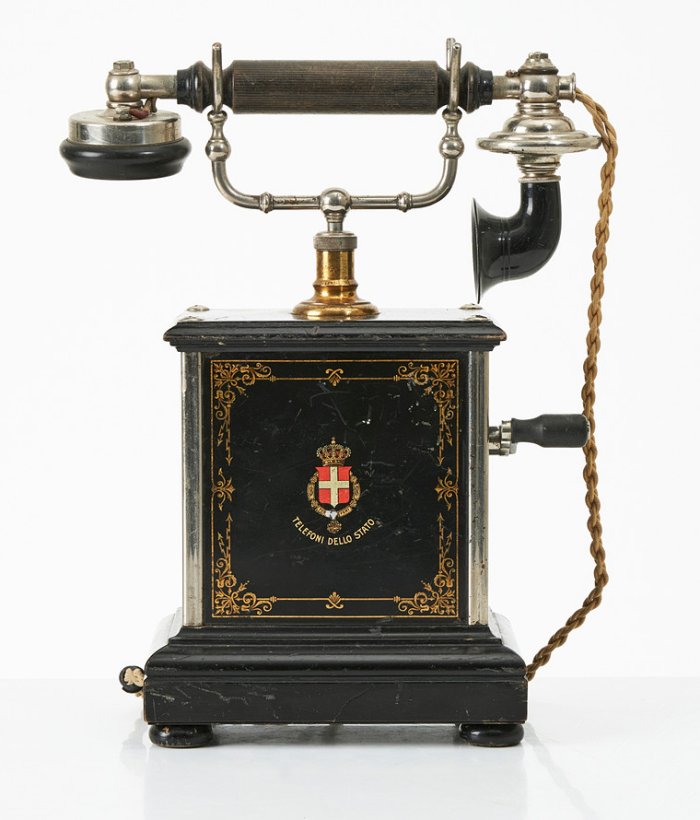
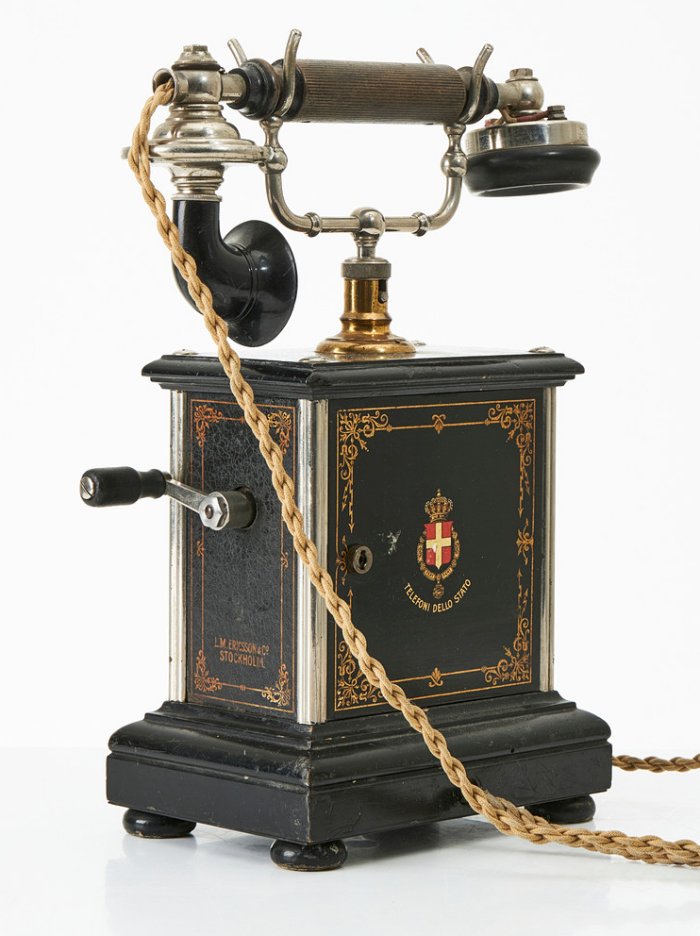
AC 300, AC 310 and AC 320 Generator and Ringer (see table below). The base & top plate are made of ebonised pear-tree wood, and the sides of black enameled steel. If preferred & without extra cost we supply these telephones enameled to imitate walnut. At an extra cost we supply these types with 2 cranks.
Taken from the Ericsson Telephone Catalogues 1912
and 1923 Additional Information Telephone AC300 (shown pictured above) was previously numbered the 381. This set was made from 1901 which was the Ericsson company's 25th year. The phone is called the jubilee set and is more ornate then other sets from this period. Ericsson AC300 was widely used in Britain and the GPO used it as their Telephone No. 88, with the metal side panels painted in wood grain finish. The National Telephone Company used it as their NT13. But the generic name for this type of phone, the "Corporation Set" arises from the fact that the municipal corporations that entered the market in the early 1900s used this type of phone almost exclusively. However, it appears that British Ericsson (Beeston, Notts) declined to supply these networks, as they wished to maintain good relations with the NTC, so the corporations, such as Glasgow, had to buy directly from Ericsson in Norway. Telephone AC310 had a 4 magnet generator and was previously numbered the model 383. Telephone AC320 is similar to the AC310 except that it had a ringer resistance of 1000 ohms, 4 magnet generator and, if requested, a press button for cutting out the ringer coils and short circuiting the induction coil. This button was pressed down whilst ringing out.
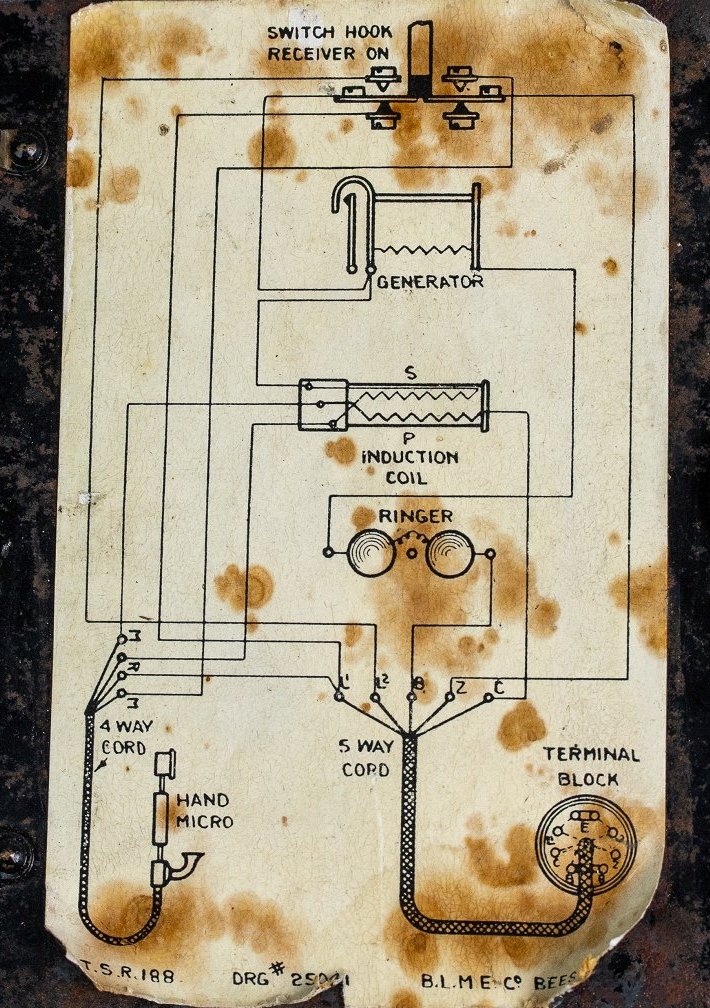
AC300 Circuit Diagram
|
||||||||||||||||||||||||||||||||
Last revised: July 23, 2025FM2 |
 L. M.
ERICSSON
L. M.
ERICSSON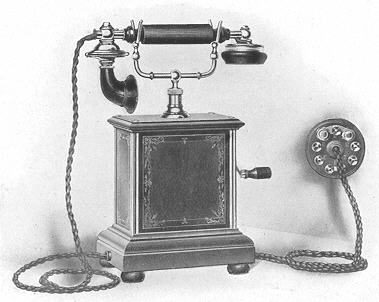 Micro-telephone RE1004 resting on a cradle switch, with cord RS 6010,
flexible cable (for type see table below) & terminal block with disc
protector.
Micro-telephone RE1004 resting on a cradle switch, with cord RS 6010,
flexible cable (for type see table below) & terminal block with disc
protector.